Mentorship is often seen to guide, support, and inspire, but can it also help mentees secure employment? On November 27th, 2025, the Alberta Immigrant Mentorship Network (AIMN) met to discuss exactly that.
Moderated by Cheryl Whitelaw of AIMN and Doug Piquette from the Edmonton Region Immigrant Employment Council (ERIEC), the online session explored how mentorship can transform into employment.
In the session, attendees heard from two experienced speakers who shared their insights from programs and community events where mentorship connections have been intentionally linked to employment outcomes.
Guest speakers included:
- Toyin Odelele, Founder and Executive Director of the Immigrant Council for Arts Innovation (ICAI)
- Glenys Reeves-Gibbs, Community Leader, Lloydminster Mentorship Program
Doug initiated the session’s discussion by asking panellists how their mentoring programs are structured.
Toyin elaborated on the Immigrant Council for Arts Innovation’s mentoring program, highlighting that it was inspired by her own lived experience. After coming to Canada, Toyin faced the challenge of not being able to find work in the arts sector. The question that guided her in the development of ICAI’s mentorship program was: What would have been helpful to me during my transition to the Canadian Arts workplace?
That reflection led to the creation of two programs designed to support newcomers navigating employment in Canada:
- Mentors in Residence Program (MiR): A mentorship program that focuses on personalized guidance tailored to mentees’ needs as newcomers or immigrant arts professionals. Mentors are handpicked from across Alberta and volunteer their time to share professional insights, resources, and expertise during a one-hour mentoring session designed to support their mentees’ career goals.
- Newcomer Art Professional Program (NAPP): A mentorship program dedicated to the professional development and empowerment of newcomer arts professionals in Edmonton and Calgary. This program is not about art but rather about employment. Mentees from fields within arts and business connect with mentors based on their experience and goals and meet four times per month. Mentors connect mentees to resources and learning opportunities to help them establish their careers within the Canadian arts sector.
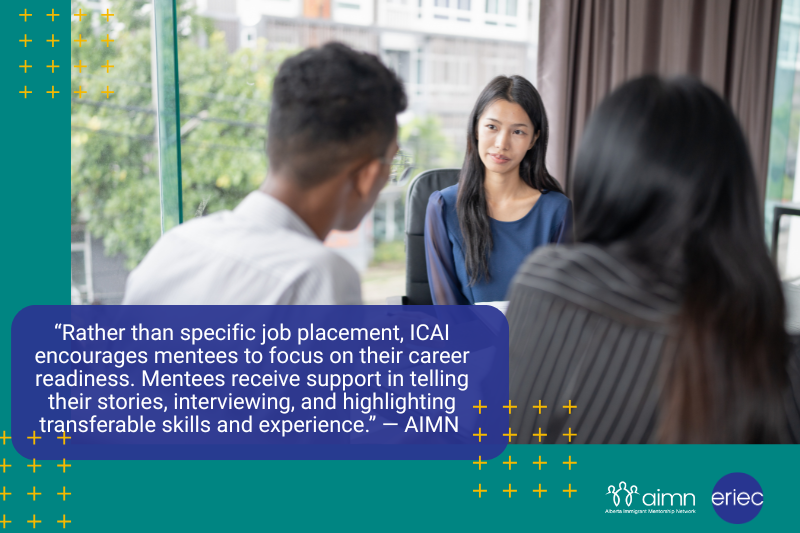
Rather than specific job placement, ICAI encourages mentees to focus on their career readiness. Mentees receive support in telling their stories, interviewing, and highlighting transferable skills and experience.
“Understanding their skills and what it means in Canada can help with confidence. I wouldn't have called myself an arts manager until I got here. It was critical for finding my place, and often, people need help finding their place in Canada.”
The programs also include reviewing resumes and LinkedIn profiles and encouraging mentees to see how their skills can be applied across many fields, not just the arts.
"We understand that participants juggle many commitments, so mentor flexibility is essential,” says Toyin when asked about the challenges faced in implementing ICAI’s mentorship programs. “Mentor matches are made intentionally to maintain professional boundaries and shared backgrounds can help. However, too much familiarity can slow progress,” she says. The program also faces funding challenges, as many funders prioritize programming over operational support needed to sustain this work.
Glenys Reeves-Gibbs, a Community Leader with the Lloydminster Mentorship Program, shared that this pilot mentorship program took a strong community-based approach. They look at “jobs” in a broader sense, seeing meaningful work in any area, including starting your own business or exploring alternative career paths.
The Lloydminster Mentorship Program organizes mentorship events for newcomers that resemble networking sessions. The program invites professionals from diverse sectors so participants can meet multiple people, ask questions, and share stories about challenges and successes. Partnerships grow naturally through these events, and mentor-mentee matches are made based on experience and sector. Events often run like “speed dating,” allowing people to connect quickly with different professionals and hear about resources beyond the program. When there was a large influx of Ukrainian newcomers, many of whom didn’t speak English, they found that technology like translation apps helped them communicate and connect them to the right supports.
These connections produced real results. For example, one participant secured a volunteer bookkeeping position, gaining experience that led to future employment.
Some newcomers return to share their experiences to help guide others. “We built a community of mentorship,” says Glenys. A community that supports newcomers not just in finding a job, but in adapting, growing, and thriving in a new environment.
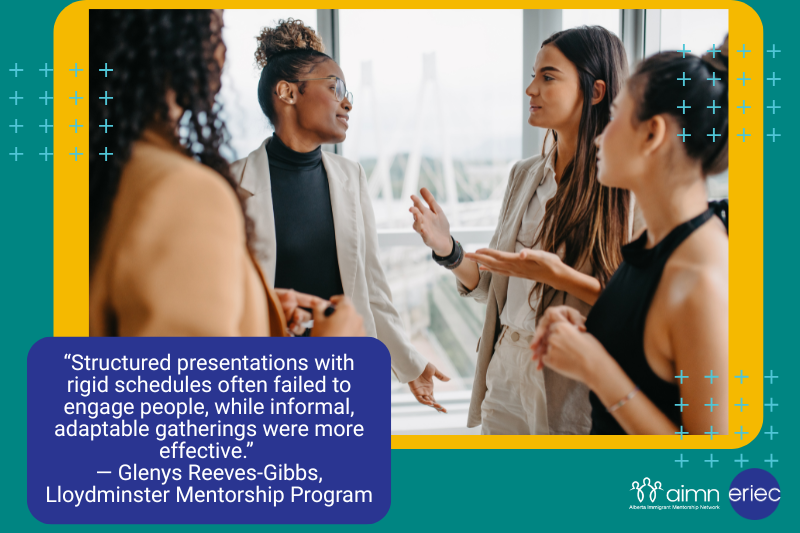
When it comes to challenges, Glenys shared that the Lloydminster Mentorship Program learned the importance of flexibility. Structured presentations with rigid schedules often failed to engage people, while informal, adaptable gatherings were more effective. In rural settings, newcomers face unique challenges without big city supports, like navigating school enrollment for kids, obtaining driver’s licenses or health cards, and adjusting to differences between their previous work experience and the Canadian job market.
“Our role was to meet them where they were, helping them translate their skills and experiences into opportunities in their new community,” Glenys explained.
While many mentorship programs set the expectation that mentors are not responsible for securing jobs for their mentees, this online session highlighted creative approaches that bridge mentoring and career development, sometimes resulting in mentees securing employment as a result. Attendees discovered practical strategies to integrate job-seeking guidance into mentoring conversations, helping mentees translate mentorship into tangible career progress.
As Cheryl from AIMN put it, “Mentorship is simple. Applying it is complex. Alberta Immigrant Mentorship Network allows us to spotlight all the different ways that people are making these simple connections work.”
Read More: Spotlight: Lloydminster Mentorship Project
The AIMN is sponsored by ERIEC. The AIMN is appreciative of the funding from the Edmonton Community Foundation. Our program is here to provide information and support to help organizations start mentorship programs.